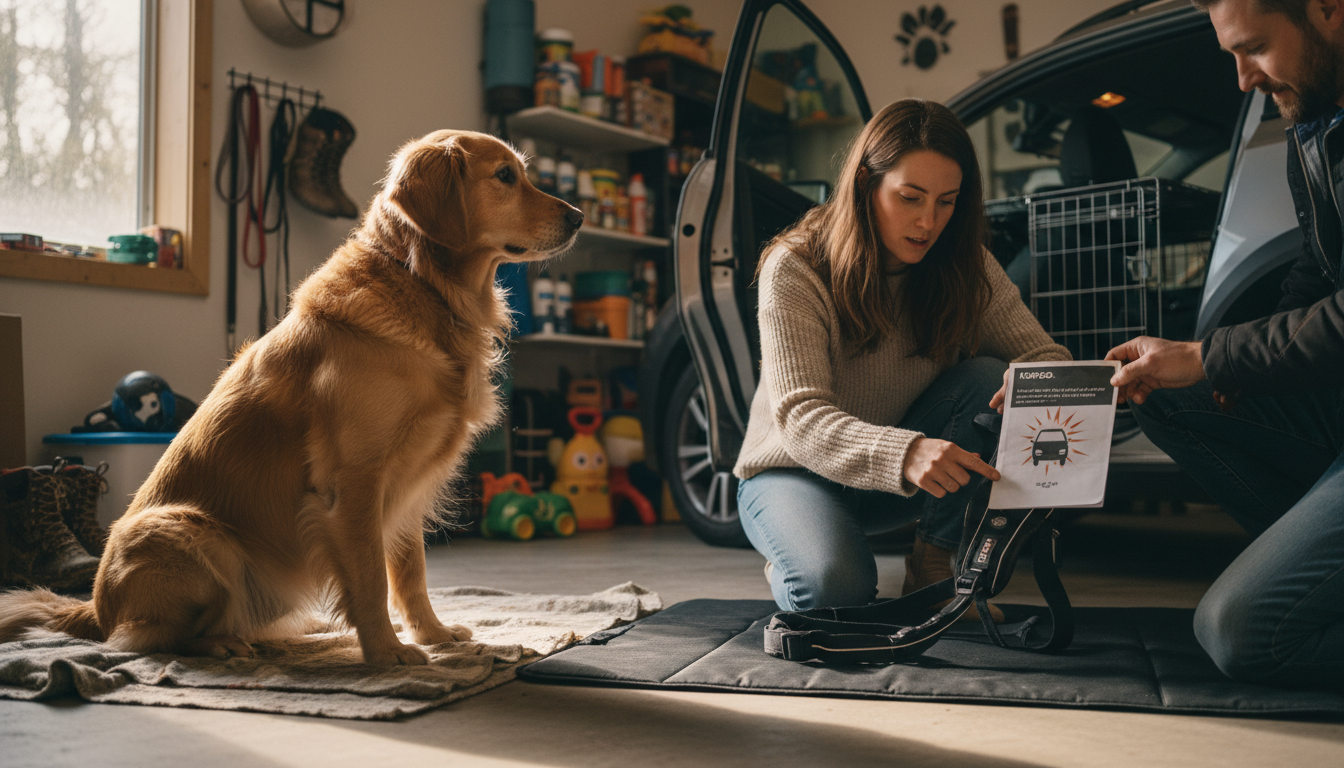
Some Kurgo dog car harnesses are crash tested, but not every harness in the Kurgo lineup is. Kurgo has long marketed specific “car harness” models—most notably the Tru-Fit Enhanced Strength harness—as crash tested using procedures based on the Federal Motor Vehicle Safety Standard (FMVSS) 213 (the same standard used for child restraint testing), typically for dogs up to a stated weight limit.
Look for “crash tested” language on the exact product page or packaging for the harness you’re considering, along with the stated test standard and the weight range it covers. If that information isn’t clearly listed, assume it’s a walking harness (not a restraint) until you confirm otherwise.
“Crash tested” usually means the manufacturer has tested that product in a controlled crash simulation and is sharing those results. It doesn’t automatically mean the harness is certified by an independent organization, and it doesn’t guarantee zero risk—fit, correct seat-belt routing, and using the right attachment points matter just as much as the harness itself.
A crash-tested harness can be a helpful part of a calmer, safer ride—especially for dogs who prefer sitting or lying on the seat rather than riding in a crate. For smaller pups, some families prefer a secured carrier or car seat-style setup that keeps them contained and supported. For a cozy overview of travel options and how to set your dog up comfortably on the road, visit this dog car travel guide.
They can be, because they’re designed and tested to help reduce forward movement in a sudden stop or collision. The best results depend on choosing the right size and using the seat belt exactly as directed.
For many dogs who ride in the car often, it’s a practical upgrade for added peace of mind and better restraint. If your dog travels frequently, the durability and safety-focused design can make the investment feel worthwhile.