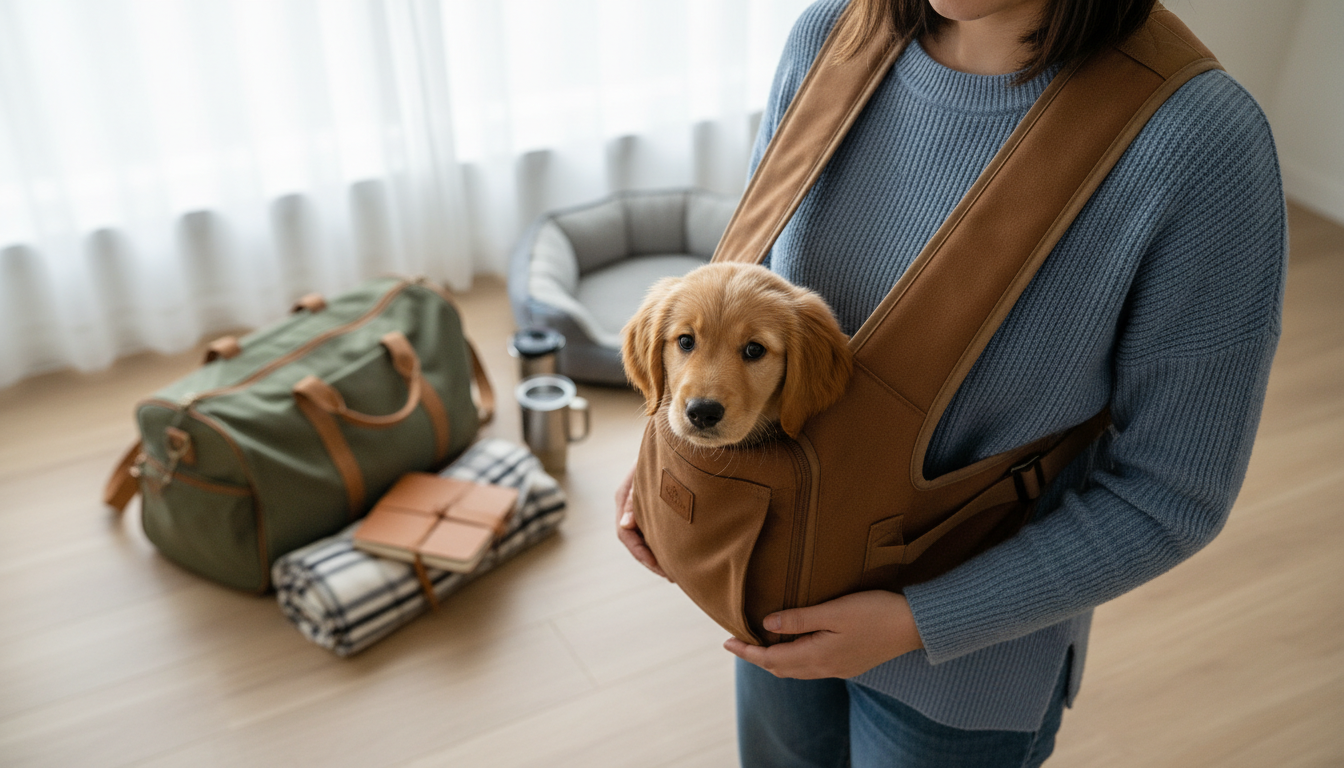
Front facing dog carriers can be safe and cozy for many dogs when they fit well and are used the right way. The biggest safety factors are proper sizing, secure closures, breathable materials, and making sure your dog’s spine and hips are supported rather than dangling.
A safe front carrier keeps your pup close to your center of gravity, which can feel reassuring for nervous dogs and helps you move steadily in crowds or on short walks. Look for a structured base or supportive panel that keeps your dog’s body level, plus adjustable straps that distribute weight across your shoulders and back.
Front carriers are less safe when the dog is too heavy for the design, the fit is loose, or the leg openings force an awkward “hanging” position. Avoid carriers that let your dog bounce, twist, or slump, and don’t use any carrier that restricts breathing or presses on the throat.
Below are practical points for how to use a front facing dog carrier safely.
Follow the brand’s sizing chart and weight limit. Your dog should be able to sit or lie naturally, with the spine supported and no pressure points on the belly, armpits, or neck.
Straps should be snug but not tight, and your dog should feel secure without sliding. Do a quick “bounce test” at home: if your pup shifts a lot, adjust or reassess the carrier.
Keep outings shorter in warm weather and confirm there’s plenty of ventilation. If your dog pants heavily, drools, trembles, or tries to escape, take a break and switch to a different travel option.
For more comfort-focused tips on choosing carriers and travel gear, visit this guide to pet travel comfort gear.
They’re generally safe when sized correctly and designed to support your dog’s body rather than letting them hang. Choose sturdy closures, good ventilation, and a weight rating that matches your dog.
Yes, strollers can be a great option for small dogs who get tired easily, are recovering from injury, or need a low-stress way to stay included. Pick one with a secure harness attachment and smooth, stable wheels.
Most 25-pound dogs can’t fit under-seat in a standard in-cabin carrier, so airline-approved cargo travel or a pet-friendly airline policy is often required. Confirm the airline’s size and weight rules early and book any pet space as soon as possible.