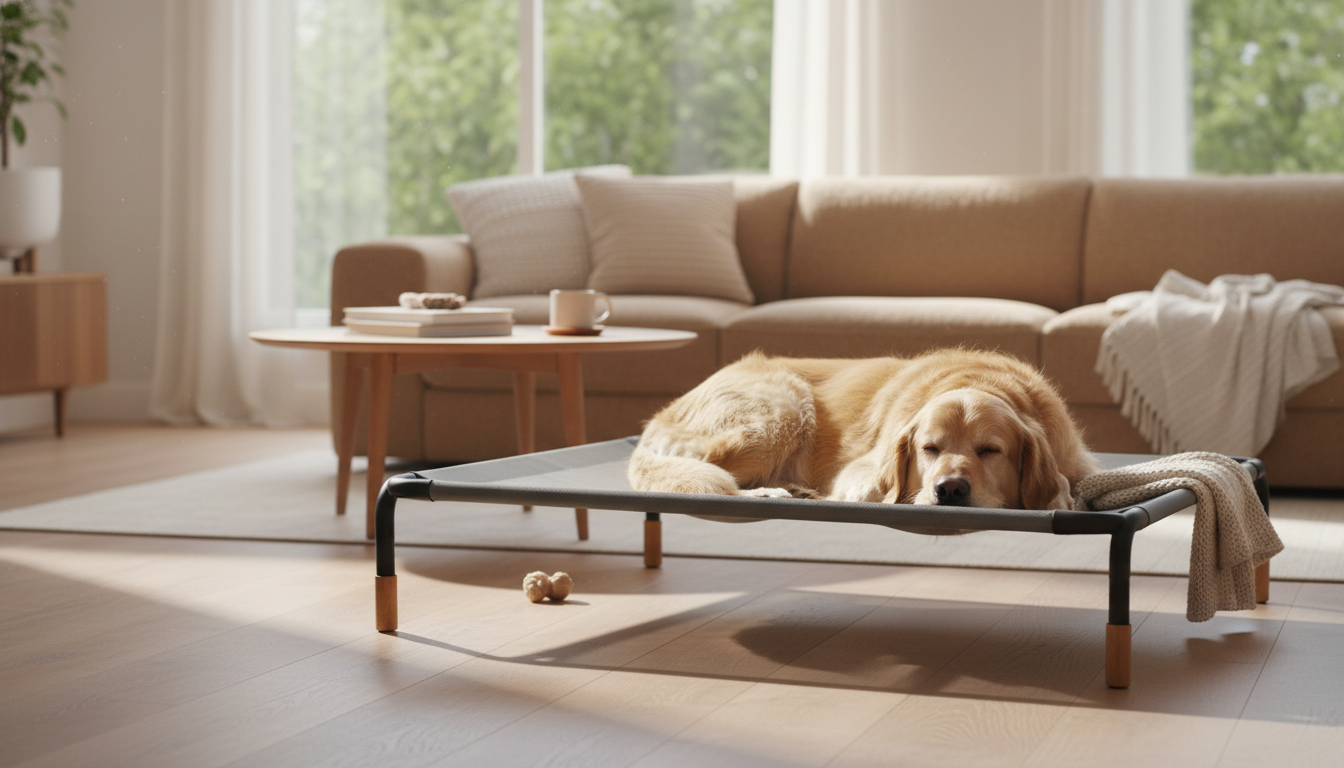
Yes—elevated dog beds can be an excellent choice for large dogs when comfort, support, and durability are top priorities. Raised cots distribute weight evenly across a taut surface, which can reduce pressure on hips, elbows, and shoulders. For dogs who run hot, the airflow beneath the bed helps regulate temperature, keeping big pups cooler after walks or during warmer months.
Durability is another win. Sturdy steel or aluminum frames with tough, rip-resistant fabrics are built to handle higher weights and daily use, indoors or outdoors. They’re also easy to clean—hair and dirt don’t get trapped like they can in plush beds—making them a hygienic pick for messy paws or shedders.
That said, elevated beds aren’t perfect for every large dog. Seniors, dogs with severe arthritis, or pups with limited mobility may struggle with stepping up and down, even if the height is modest. For these dogs, a plush, low-profile, orthopedic-style bed can be more comfortable and easier to access—especially one with generous cushioning and supportive bolsters that cradle joints and promote quality rest.
What to look for when choosing an elevated bed for a large dog:
If your big dog prefers a nest-like feel or needs extra joint relief, a plush, supportive alternative can be a better everyday choice. Learn more about cozy at-home options in our guide: Round Dog Bed “Cloud Cushion”.
Side sleeping on a supportive surface often reduces pressure on joints. Providing bolsters or pillows to brace the back or support the neck can add comfort, and a low-profile bed makes getting up and down easier.
Senior dogs typically benefit from orthopedic foam with easy entry, non-slip bottoms, and supportive bolsters. A plush, pressure-relieving bed helps protect aging joints and promote deeper, restorative sleep.
Avoid high-impact activities, slippery floors without traction, and beds that are too tall or unsupportive. Don’t skip regular vet checkups, and avoid sudden routine changes that can increase stress or discomfort.