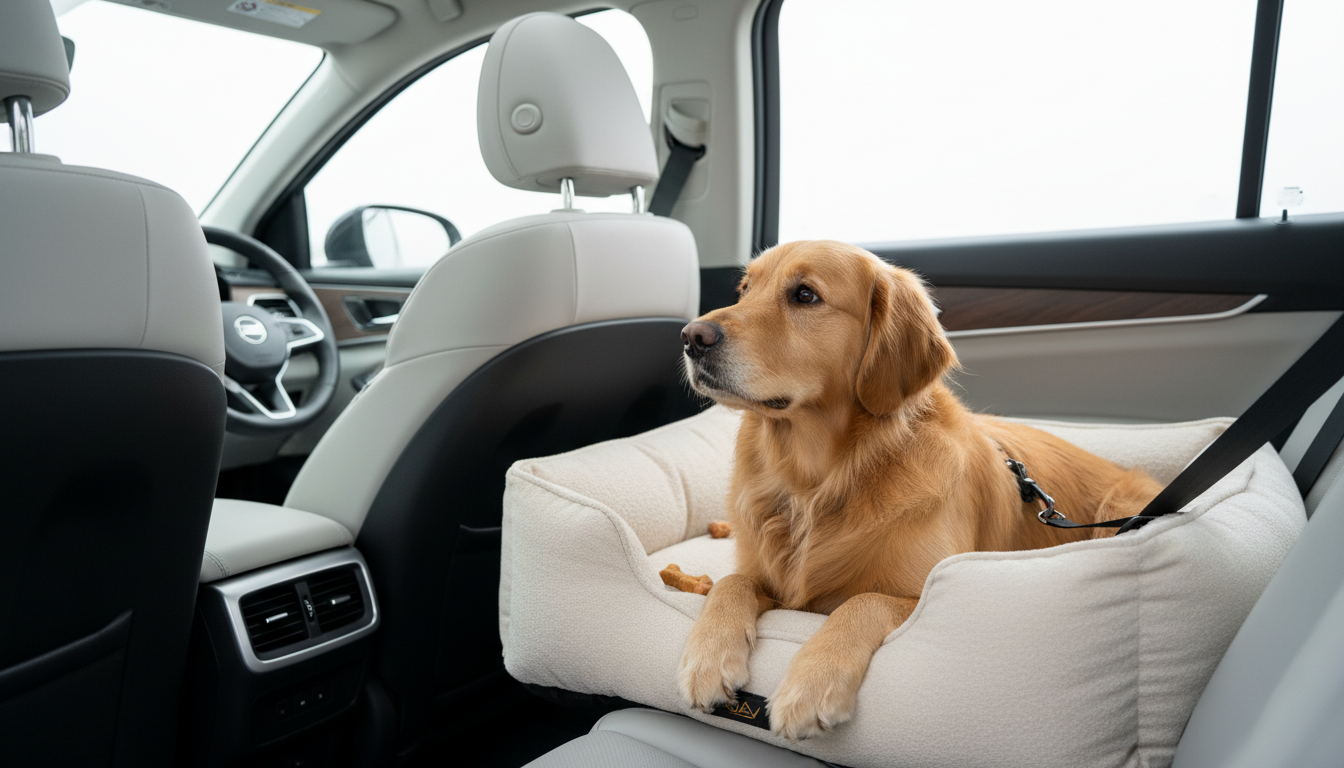
For most dogs, the back seat is the safer choice. It creates a bit more distance from the dashboard and airbags, offers more stable space for a properly secured carrier or harness, and helps reduce distractions for the driver. The front seat can be convenient, but it comes with a bigger safety tradeoff—especially in vehicles with active passenger airbags.
The back seat generally provides a more protected “zone” during sudden stops because it’s farther from hard surfaces like the windshield and dashboard. It also gives you more flexibility to secure your dog correctly—either by placing a travel carrier on the seat and buckling it in, or by using a crash-tested harness attached to the seat belt system. For small dogs, a well-structured, buckle-secured car seat carrier can help keep them stable and comfortably contained throughout the ride.
The front seat can be acceptable only when your dog is properly restrained and the passenger airbag is disabled. Airbags deploy with significant force, and even a small impact can be dangerous to a dog sitting close to the dashboard. If disabling the airbag isn’t possible, the back seat is the safer default.
Wherever your dog rides, the goal is the same: keep them secure, supported, and unable to roam. Choose a restraint that fits your dog’s size and travel style—like a sturdy, seat-belt-secured carrier for small dogs or a crash-tested harness for larger pups. Place the setup on a flat seat surface, remove slack so your dog isn’t launched forward, and keep the cabin calm with a familiar blanket or cushion for extra comfort.
For a deeper look at choosing the right option for small dogs, see the guide here: https://kingwuff.com/blog/guide-puff-puppy-dog-car-seat-carrier-bag-king-wuff/.
It can be a good choice for many dogs if it fits their size and sleep style and uses supportive, washable materials. Look for a non-slip base, durable stitching, and enough cushioning—especially for seniors or larger breeds.