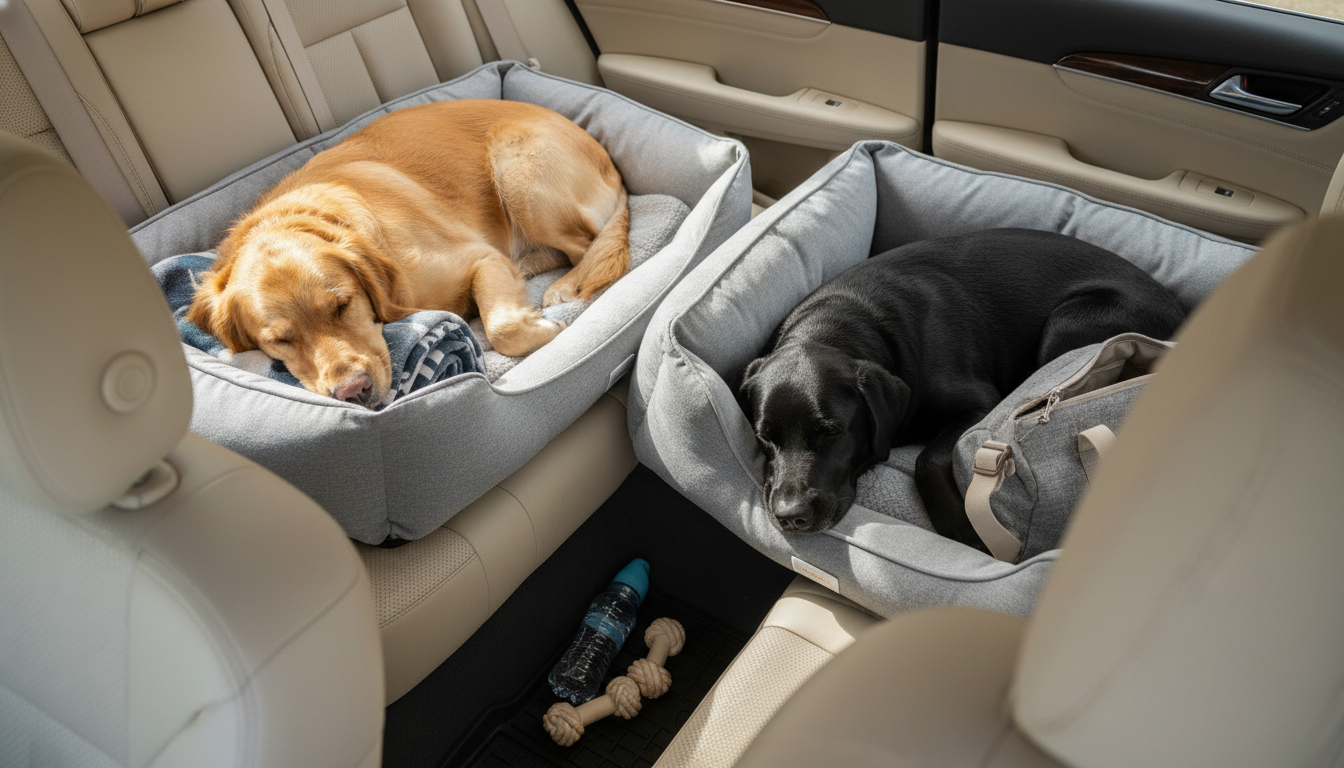
For most family dogs, sleeping inside is the happier, safer option. Being indoors keeps them close to their people, protected from weather swings, wildlife, and overnight noises that can cause stress. Many dogs also sleep more deeply inside because they feel secure and can follow the household routine.
Happiness at bedtime usually comes down to how safe and settled a dog feels. Indoors, dogs are less likely to deal with heatstroke, hypothermia, parasites, escape risks, or unexpected visitors (like raccoons or stray animals). Just as importantly, indoor sleep supports a predictable schedule—something that helps many dogs relax and drift off faster.
There are situations where outdoor sleeping can be okay, but they’re the exception, not the norm. A dog might do fine outside if they have a secure, enclosed space, mild temperatures, low humidity, constant access to water, and protection from wind, rain, and pests. Even then, many dogs still prefer being near their family at night.
If the goal is a happier dog at bedtime, focus on a calm setup: a consistent spot, a comfortable bed with supportive cushioning, and a clean, inviting sleep surface. Dogs often love a “den-like” feel—snug but breathable—especially in busy households. If your pup is adjusting from outdoor sleep, start with short, positive indoor rest periods and keep the routine steady.
For a deeper look at choosing a cozy, easy-to-clean sleep space, visit this guide to a cozy dog bed setup.
A content sleeper typically settles within a few minutes, sleeps through most of the night, and wakes up relaxed. Restlessness, frequent barking, pacing, or waking repeatedly can be a clue that something about the sleep environment—temperature, noise, bedding support, or separation from the family—needs adjusting.
It can be a good choice for many dogs if it fits their size and sleep style and uses supportive, washable materials. Look for a non-slip base, durable stitching, and enough cushioning—especially for seniors or larger breeds.