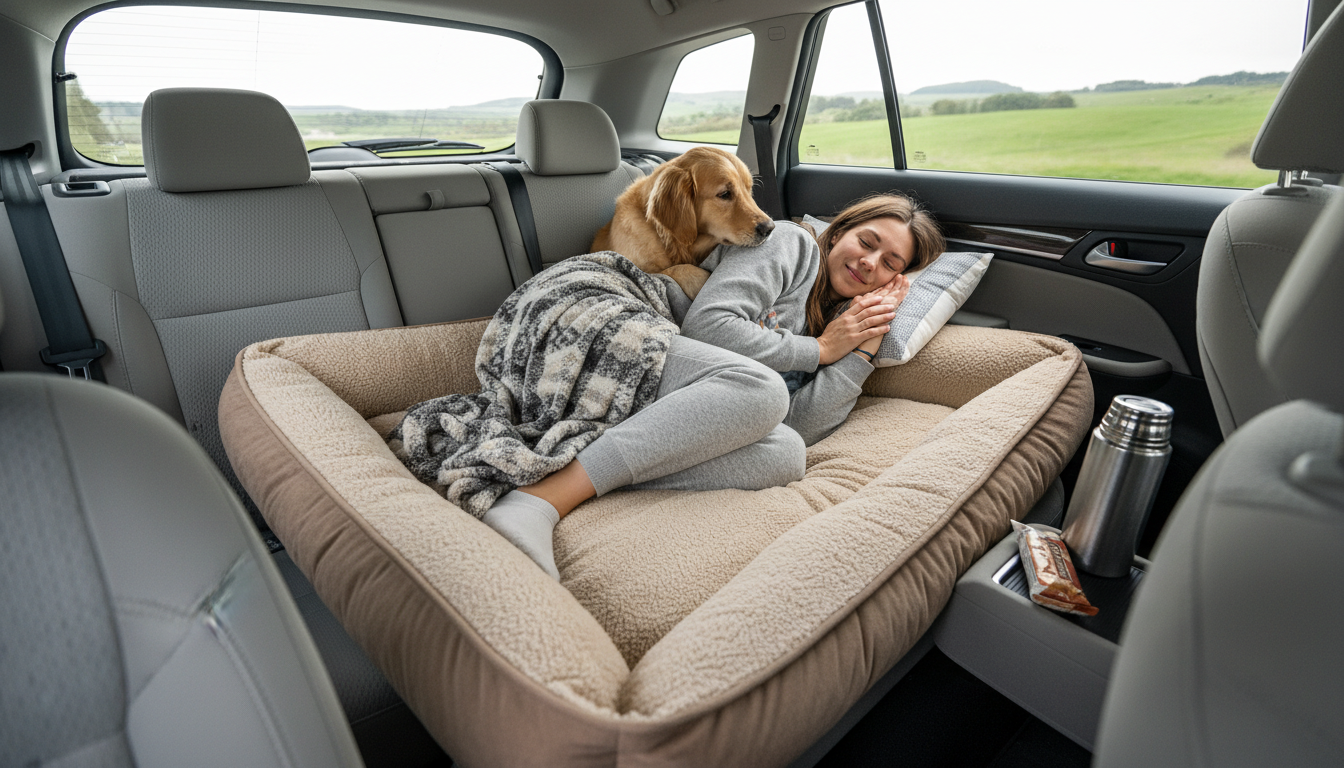
Sometimes, yes—but it depends on how the bed is used and how it’s maintained. A clean, supportive dog bed can be comfortable for a quick cuddle or lounging with your pup. The main safety concerns for humans are hygiene (dander, saliva, bacteria), allergens, and wear-and-tear that can expose filling or create uneven support.
A dog bed is typically fine for occasional human use if it’s kept clean, the cover is washable, and the materials are intact (no exposed foam, loose stuffing, or sharp zippers). Enclosed “cave” or “snuggler” styles can feel cozy, but make sure there’s enough room to avoid awkward pressure on joints or restricted airflow—especially for kids.
Allergies and asthma: Dog beds collect dander, pollen, and dust. If allergies flare up, avoid sharing the bed and wash it more frequently.
Germs and parasites: Even healthy dogs can bring in dirt, yeast, or fleas/ticks after walks. Keep your dog on vet-recommended preventatives and launder the bed on a regular schedule.
Support and posture: Dog beds aren’t designed for adult spinal alignment. If you’re using it like a floor cushion, keep it brief—especially if you have back or hip issues.
Choose a bed with a removable, machine-washable cover, vacuum it between washes, and inspect seams and zippers so nothing breaks open. If the bed is a “cozy cave” style, ensure the hood or cover doesn’t trap heat for your dog or your child during longer cuddles.
For a closer look at cozy, den-like designs and what makes them comfortable for dogs, visit this guide to the Snuggler Cozy Cave bed.
It can be a good choice for many dogs if it fits their size and sleep style and uses supportive, washable materials. Look for a non-slip base, durable stitching, and enough cushioning—especially for seniors or larger breeds.