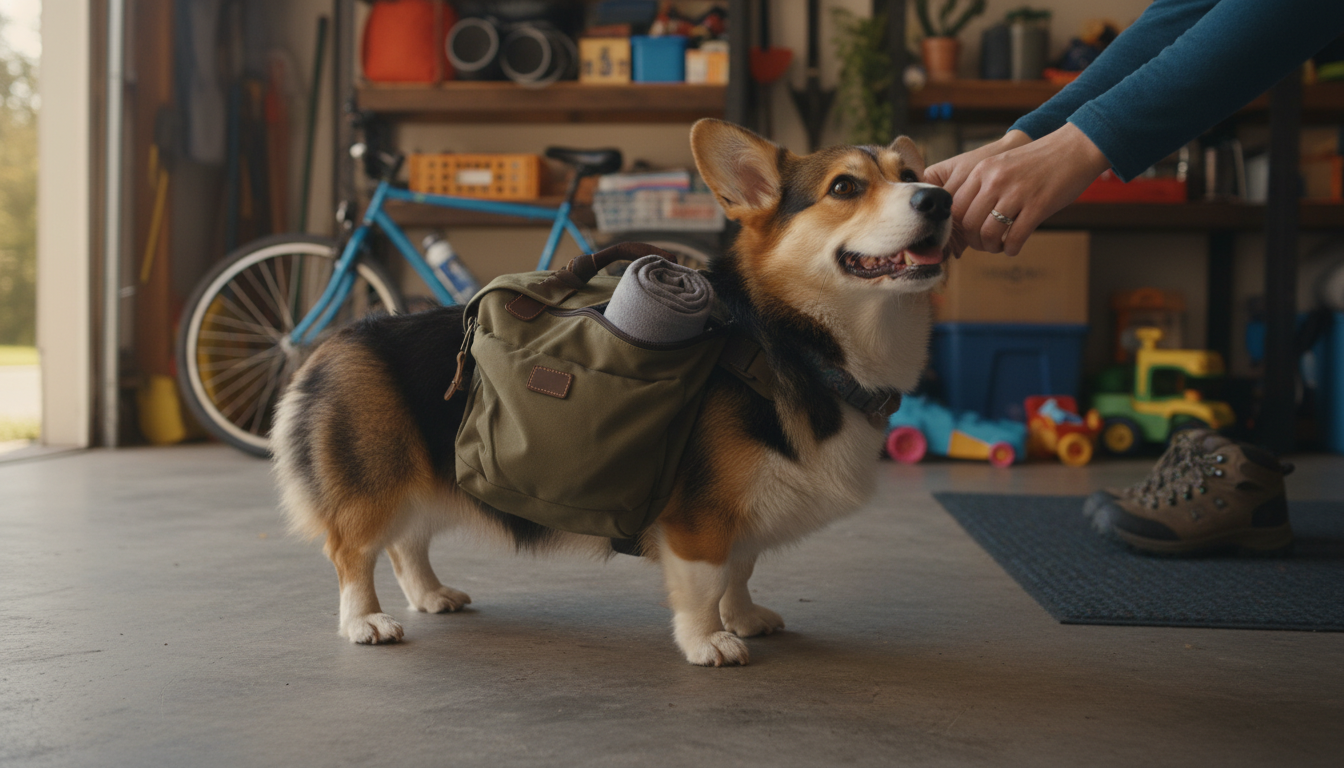
Corgi backpacks can be safe when they’re used for the right dog, fit correctly, and are designed to support a long-backed, short-legged body. The biggest safety factors are spinal support, a secure fit, good ventilation, and keeping the carried weight within a comfortable limit. If a backpack squeezes the chest, lets your corgi slump, or bounces while walking, it can quickly go from “convenient” to stressful.
Look for a structured base or supportive panel that helps keep your corgi level rather than curled or dangling. A wide, padded harness system that distributes pressure across the chest and shoulders (not the neck) is key, along with adjustable straps to prevent shifting. Ventilation, a stable opening so your dog can sit naturally, and secure closures (zippers plus safety clips) help prevent overheating and escapes.
Skip backpacks for puppies still growing, seniors with mobility issues, or any corgi with back, hip, or breathing concerns unless a veterinarian says otherwise. Avoid long carries on hot days, on rough trails, or if your dog shows signs of stress like heavy panting, trembling, drooling, or trying to climb out. Even with a great carrier, take frequent breaks and keep sessions short at first.
For many outings, a hands-free dog walking bag can be the safer “support act” to a leash rather than carrying your corgi. It keeps essentials organized (treats, waste bags, water, phone) so you’re not juggling items and can focus on your dog’s pace and comfort. For a practical example of a cozy, organized setup, see this guide: hands-free, organized carry for dog walks.
It can be worth it if the fit supports your dog’s body and the materials feel sturdy, breathable, and easy to clean. Prioritize comfort and stability over style, and confirm your dog’s measurements match the brand’s sizing guidance.
Most corgis shouldn’t be left alone all day on a regular basis. They’re social and active, and long stretches alone can lead to stress, boredom, and behavior issues without breaks, enrichment, and potty options.
A “chonk dog” is a playful way to describe a dog that’s overweight or extra round. Since extra weight can strain joints and the back, it’s a good idea to check body condition with a vet and adjust diet and exercise as needed.