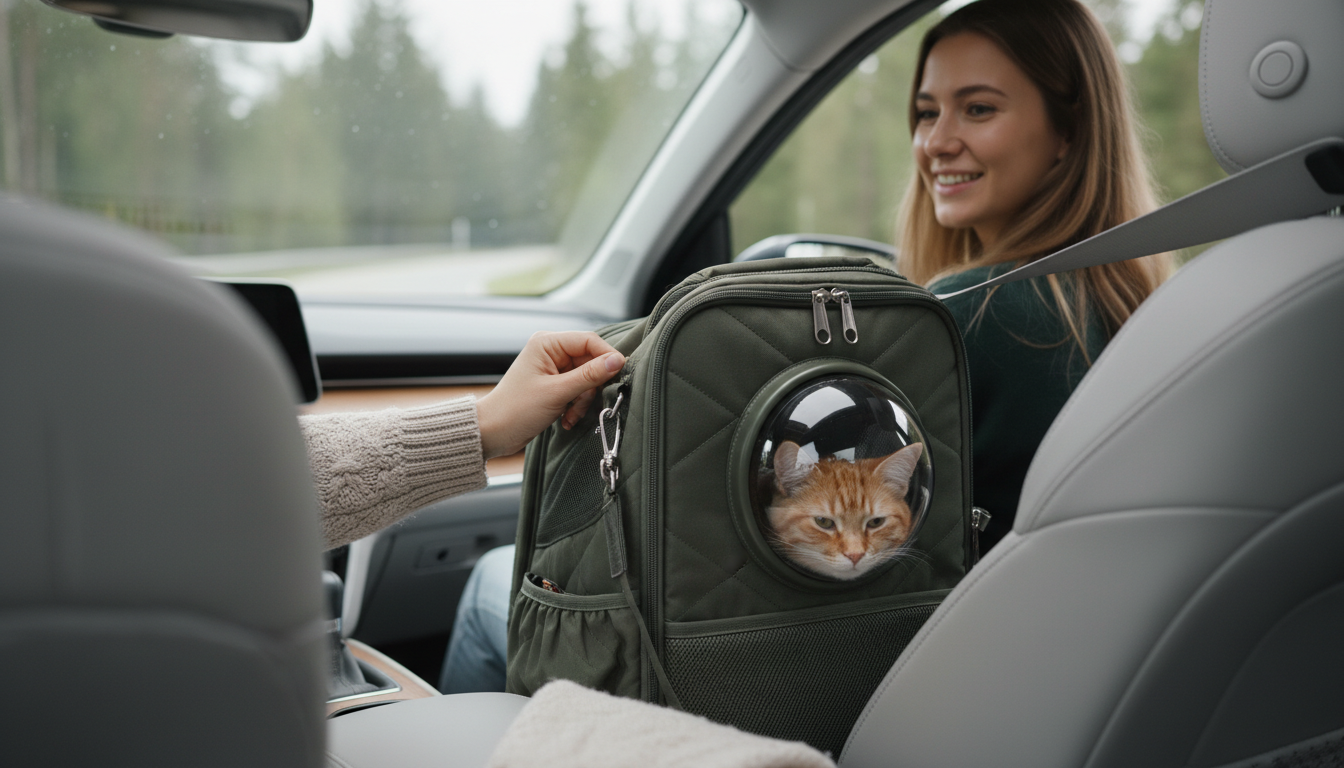
Yes—backpack cat carriers can be a safe, comfy option for many cats when the carrier is well-designed and used correctly. They’re especially handy for quick errands, vet visits, apartment living, and travel days when keeping your hands free makes everything calmer.
A good backpack carrier should feel sturdy, supportive, and breathable. Look for firm structure so the bag won’t collapse, multiple ventilation panels for steady airflow, and a secure, well-stitched zipper system that won’t pop open mid-walk. A tether clip can help prevent sudden escapes, but it should be used with a well-fitting harness (not a collar) to protect your cat’s neck.
Avoid carriers that sag, have limited airflow, or rely on thin mesh that tears easily. “Bubble” window styles can work for some cats, but they shouldn’t be the only ventilation source—heat builds up quickly in direct sun or warm cars.
Comfort depends on fit, movement, and your cat’s temperament. Choose a size that lets your cat sit, turn, and lie down naturally (without being tossed around). A padded, stable base helps reduce swaying, and adjustable shoulder and chest straps help distribute weight so your movement feels smoother to your cat.
For anxious cats, start slow: leave the carrier open at home with a soft blanket and treats, then try short, quiet practice walks before a longer outing.
Keep trips short at first, check ventilation often, and never leave your cat in a carrier inside a parked car. Watch for stress signals like heavy panting, drooling, or frantic scratching—if you see them, stop and move to a cooler, quieter spot. For extra peace of mind, do a quick “hardware check” each time: zippers, clips, seams, and strap buckles.
If you like the hands-free idea for pet outings, you may also enjoy this guide on staying organized and comfortable while carrying a pet: hands-free, organized carry tips here.
It can be a good choice for many dogs if it fits their size and sleep style and uses supportive, washable materials. Look for a non-slip base, durable stitching, and enough cushioning—especially for seniors or larger breeds.